
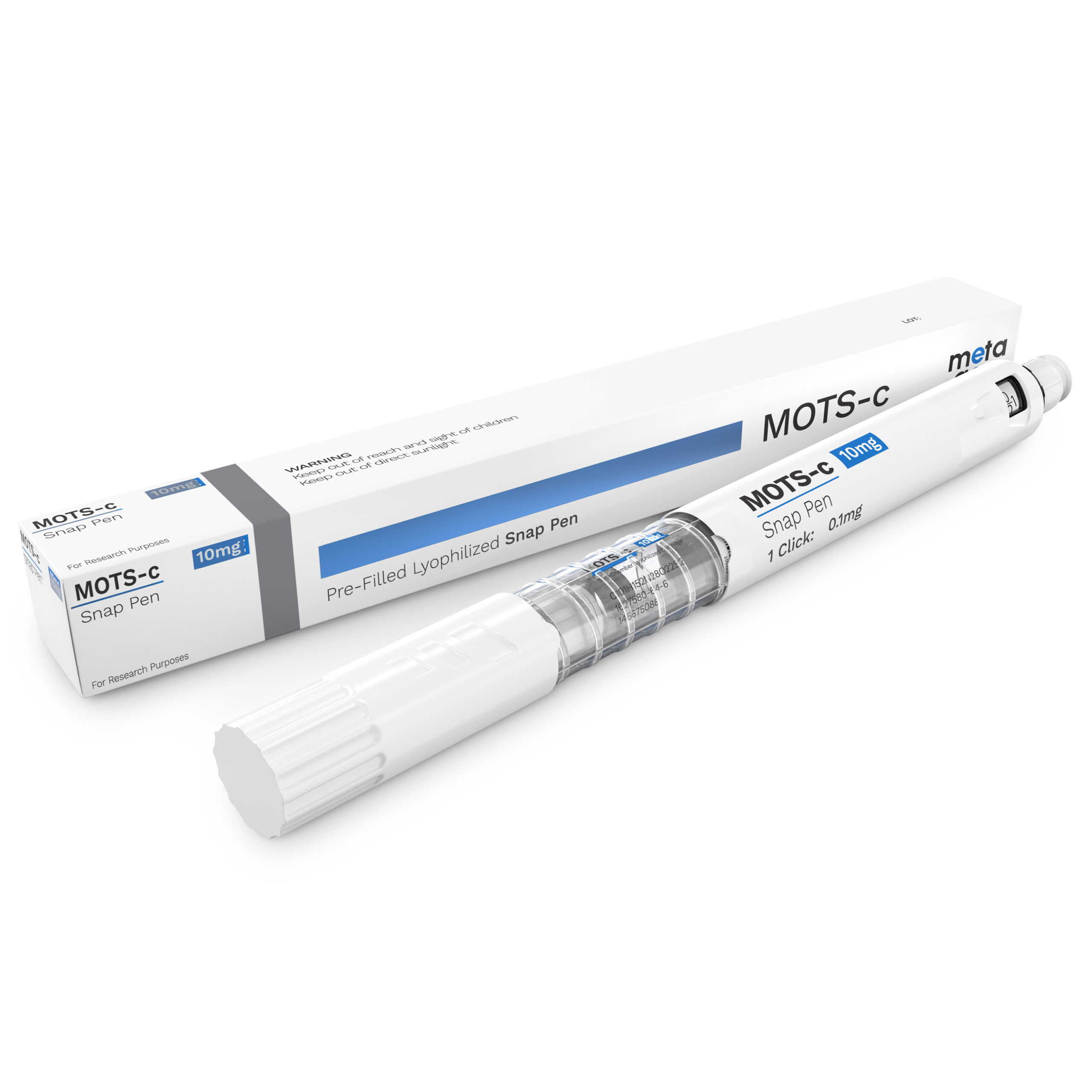

MOTS-c (Mitochondrial-Derived Peptide): Metabolic Resilience & Performance Support
Ignite cellular energy, support insulin sensitivity, and enhance exercise capacity.
MOTS-c is a 16–amino-acid peptide encoded in the mitochondrial 12S rRNA gene (MTRNR1). In research models it activates AMPK and related stress-response pathways, improves glucose and lipid handling, and helps cells adapt to metabolic stress. Interest has grown as studies show MOTS-c rises with exercise, supports metabolic flexibility, and may counter aspects of age-related metabolic decline.
What it does
- Turns on “cellular energy” switches – Promotes AMPK-driven pathways that help burn fuel efficiently and clear metabolic by-products.
- Improves insulin response – Aids glucose uptake and supports healthier blood-sugar control in preclinical and early human studies.
- Boosts exercise adaptation – Linked with better exercise tolerance and recovery signaling; levels increase with training.
- Supports healthy body composition – In animal models, helps limit fat gain and encourages better fuel use (fat oxidation).
Research is ongoing. Findings come from cell, animal, and early human studies; MOTS-c is investigational outside approved indications.
How it works (at a glance)
- AMPK pathway – MOTS-c raises AMP:ATP-like signaling to trigger AMPK, promoting glucose uptake, fatty-acid oxidation, and mitochondrial biogenesis signals.
- Folate-metabolism interface – Interacts with one-carbon/folate pathways that influence stress responses and cellular redox balance.
- Exercise-inducible signal – Circulating MOTS-c increases with acute/chronic exercise and may act as a nucleus-directed “mitokine” to tune gene expression for metabolic resilience.
Key Potential Benefits*
- Cellular Energy & Mitochondrial Support – AMPK activation; better fuel use and stress resilience
- Insulin Sensitivity & Glucose Control – Improved metabolic signaling in muscle and liver models
- Exercise Capacity & Recovery –Exercise-responsive peptide; supports training adaptations
- Healthy Body Composition – Encourages fat oxidation and metabolic flexibility
- Healthy Aging Context – Investigated for age-related metabolic slowdown
* as indicated in preclinical and early clinical research.
Research Sources
- Foundational identification & metabolic actions (Cell Metabolism, 2015 – Lee et al.)
- Exercise-inducible MOTS-c in humans (exercise studies; Cell Metabolism group)
- Mitochondria-derived peptides review (overview of MOTS-c biology)
- Aging & stress-response context (MOTS-c and healthy aging)
- Metabolic disease/insulin sensitivity models (preclinical MOTS-c)
Format & Handling
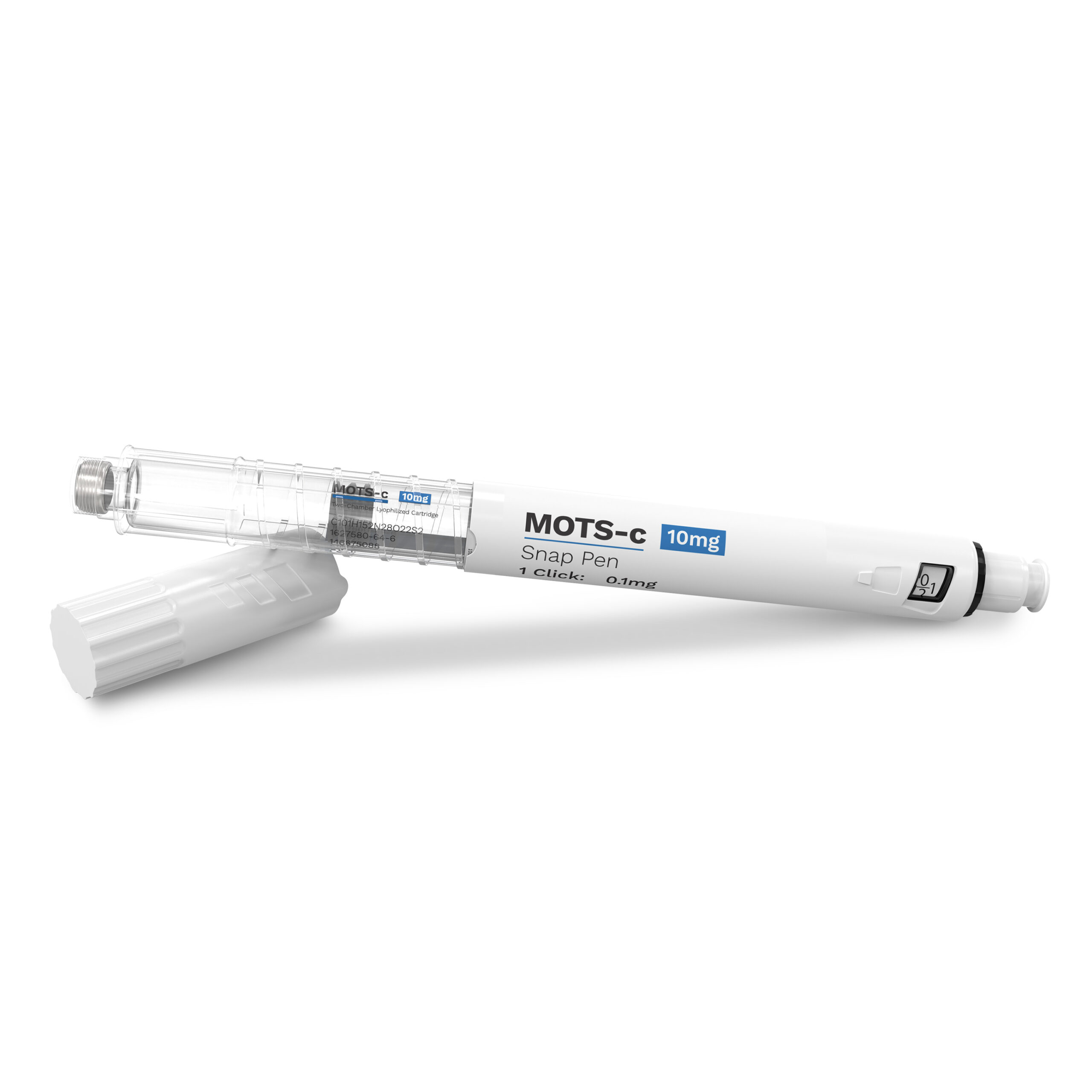
- Unit: MOTS-c in dual-chamber Snap Pen (lyophilized peptide kept separate from bacteriostatic diluent).
- Activation: Twist to snap the internal seal → gently invert to mix (do not shake vigorously) → prime and dispense per protocol.
- Storage: Refrigerate before/after activation; avoid repeated freeze–thaw; see COA/packaging for stability and beyond-use dating.
- Quality: High-purity material, low endotoxin; COA + SDS supplied per lot; cold-chain fulfillment.
Technical Information
CAS Number: | 1627580-64-6 |
PubChem CID: | 146675088 |
Formula: | C101H152N28O22S2 |
Synonyms: | Mots-c, 1627580-64-6, UNII-A5CV6JFB78, MOTS-c (human) (trifluoroacetate salt), A5CV6JFB78 |