All products / Usage / Recovery & Repair
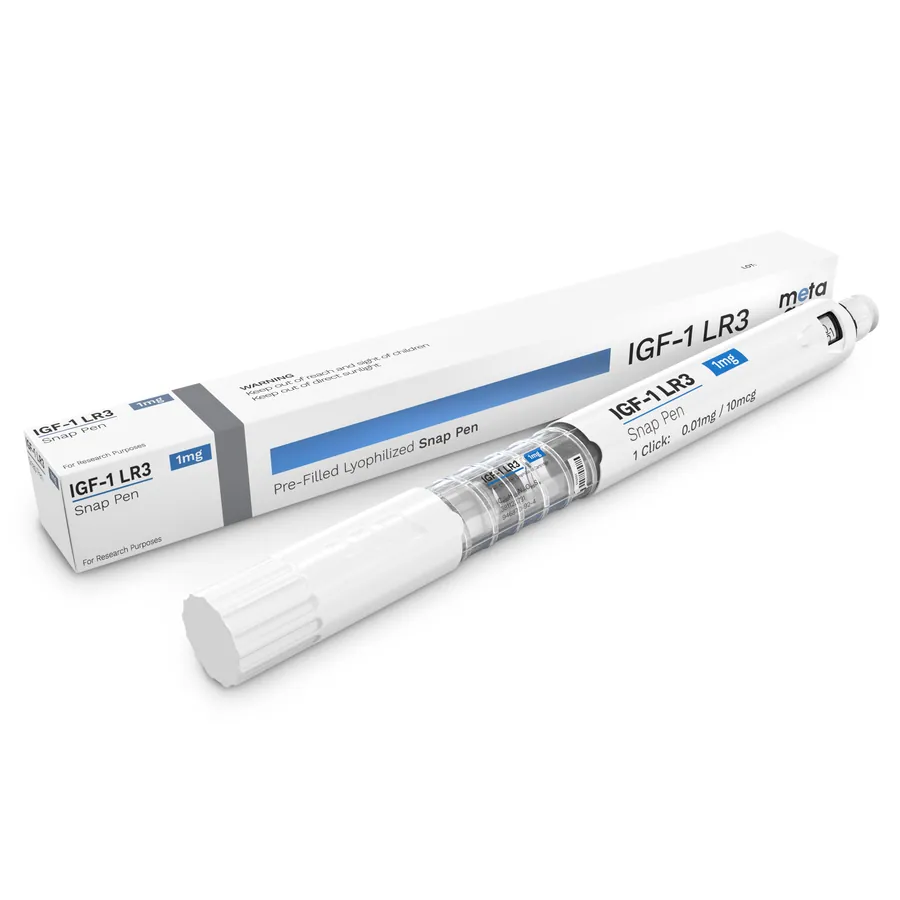
IGF-1 LR3 1mg Snap Pen
IGF-1 LR3 — a long-acting analogue of Insulin-like Growth Factor-1 with an extended half-life, studied for muscle, recovery, and body-composition research.
Recovery & RepairSnap PenMuscle & Performance
SKU: SP-IGF-1-1
 99.1% Purity
$140
- Format
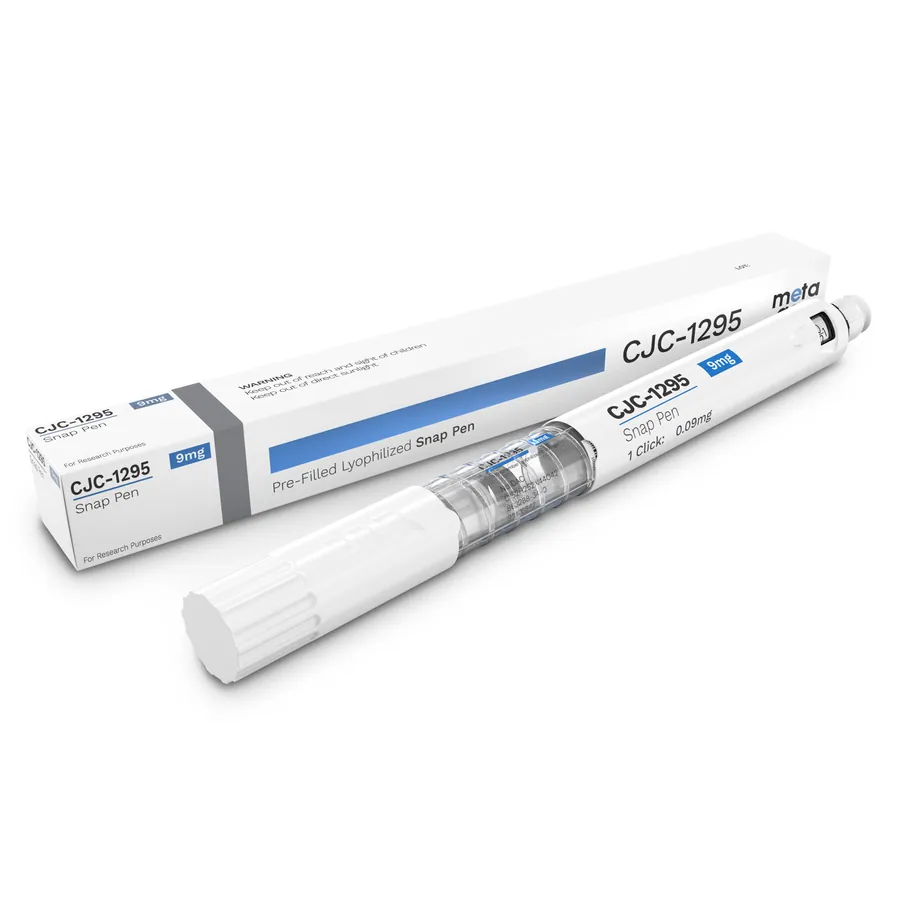
- Snap Pen
- Dosage
- 0.01 mg per click
- Capacity
- 1 mg
Potential benefits
- Muscle-growth research
- Recovery & tissue-repair research
- Fat-metabolism research
- Cellular-regeneration research
- Extended half-life
- Snap Pen stability
IGF-1 LR3 (Insulin-like Growth Factor-1 Long R3) is a synthetic analogue of naturally occurring IGF-1, modified with a 13-amino-acid extension at the N-terminus and an arginine substitution at position 3. These modifications reduce its binding to IGF-binding proteins (IGFBPs), resulting in a significantly extended half-life of approximately 20–30 hours compared to just 12–15 minutes for standard IGF-1.
MetaGen's IGF-1 LR3 Snap Pen uses a dual-chamber lyophilised delivery system, keeping the peptide stable in powder form until activation — ensuring maximum potency at the point of use. IGF-1 LR3 works by binding to IGF-1 receptors throughout the body, activating downstream signalling pathways involved in protein synthesis, cellular growth, and glucose uptake. In research models, IGF-1 signalling is associated with hypertrophy (muscle cell growth), satellite-cell activation linked to muscle repair, and fat utilisation as an energy source. This peptide is widely researched in the context of performance recovery, body composition optimisation, and anti-ageing protocols.
MetaGen's IGF-1 LR3 Snap Pen uses a dual-chamber lyophilised delivery system, keeping the peptide stable in powder form until activation — ensuring maximum potency at the point of use. IGF-1 LR3 works by binding to IGF-1 receptors throughout the body, activating downstream signalling pathways involved in protein synthesis, cellular growth, and glucose uptake. In research models, IGF-1 signalling is associated with hypertrophy (muscle cell growth), satellite-cell activation linked to muscle repair, and fat utilisation as an energy source. This peptide is widely researched in the context of performance recovery, body composition optimisation, and anti-ageing protocols.
- In research models, IGF-1 activates the mTOR signalling pathway, which is associated with muscle protein synthesis and muscle cell growth.
- Studied for its activation of muscle satellite cells, the stem cells involved in repairing damaged muscle fibres.
- Investigated for its role in lipolysis and the mobilisation of stored fat as an energy source within the GH/IGF-1 system.
- Studied in the context of tissue regeneration and cellular repair pathways.
- The LR3 modification reduces binding to IGF-binding proteins, extending active half-life to 20–30 hours versus just minutes for standard IGF-1.
- Lyophilised dual-chamber design keeps peptide and solvent separate until activation, preserving maximum potency right up to the point of use.
References
- Mechanisms of IGF-1-Mediated Regulation of Skeletal Muscle Hypertrophy and Atrophy
- IGF-1 and Leucine Activate Myogenic Satellite Cells Through the mTOR Pathway
- Optimising IGF-1 for Skeletal Muscle Therapeutics
- The Role of the GH/IGF-1 System in Visceral Adiposity
- Regulation of Skeletal Muscle Growth by the IGF1-Akt/PKB Pathway
| Molecular formula | C400H625N111O115S9 |
|---|---|
| Molecular weight | 9117.5 Da |
| Purity | 99.1% |
| Storage | Before reconstitution, store 6–50°C, refrigeration is not required. After reconstitution (mixing), keep refrigerated at 2–8°C at all times, use within 6 weeks. Do not freeze. Keep away from direct sunlight and heat. |