All products / Usage / Recovery & Repair
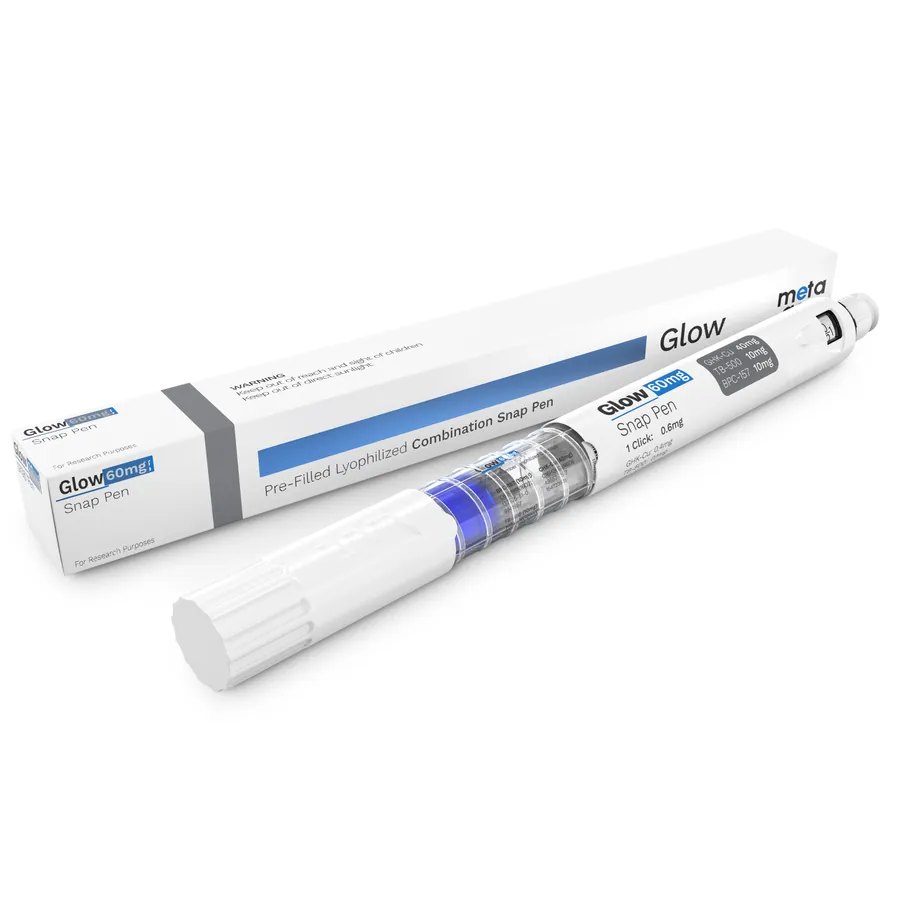
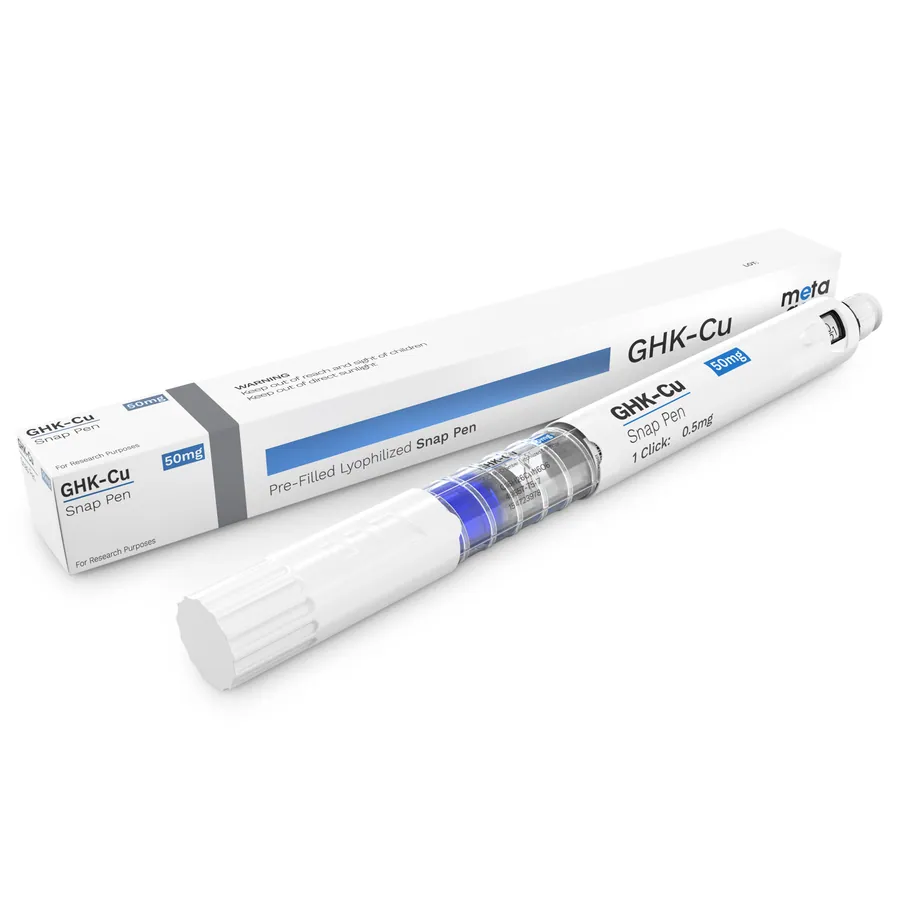
GHK-Cu 50mg Snap Pen
Copper tripeptide — tissue-repair, skin & cellular-health research
Recovery & RepairSnap PenSkin, Hair & Beauty
SKU: SP-GHK-50-2
 99.9% Purity
$135
- Format
- Snap Pen
- Dosage
- 0.5mg per click.
- Capacity
- 50 mg
Potential benefits
- Wound-repair research
- Skin-remodelling research
- Inflammation modulation
- Antioxidant research
- Hair-follicle research
- Gene-expression modulation
- Scar & tissue-remodelling research
GHK-Cu is a copper peptide complex (glycyl-L-histidyl-L-lysine bound to copper) that occurs naturally in human plasma, saliva, and tissue. It's involved in tissue regeneration, skin remodelling, and inflammation control. First identified in the 1970s, it has since been shown to influence the activity of more than 2,000 genes tied to healing, repair, and the kind of cellular function associated with younger tissue.
One of the reasons it draws so much interest is that natural GHK-Cu levels fall sharply with age. That decline is linked to slower recovery, reduced skin elasticity, and higher oxidative stress. The peptide binds copper ions and acts as a signalling molecule; research has examined its role in tissue repair, inflammation, and markers of cellular activity associated with younger tissue.
Its main mechanisms are:
In research, GHK-Cu has shown potential to support collagen production, wound healing, antioxidant defence, and tissue repair. That combination is why it's become a popular choice in research focused on recovery, aesthetics, and longevity.
One of the reasons it draws so much interest is that natural GHK-Cu levels fall sharply with age. That decline is linked to slower recovery, reduced skin elasticity, and higher oxidative stress. The peptide binds copper ions and acts as a signalling molecule; research has examined its role in tissue repair, inflammation, and markers of cellular activity associated with younger tissue.
Its main mechanisms are:
- Copper delivery — carries bioavailable copper, which is needed for the enzymes involved in healing and regeneration.
- ECM remodelling — increases production of collagen, elastin, glycosaminoglycans, and proteoglycans, while keeping tissue-remodelling enzymes (metalloproteinases) in balance.
- Anti-inflammatory signalling — dampens inflammatory mediators and boosts the body's antioxidant systems to lower cellular stress.
- Stem cell activation — switches on genes involved in stem cell function and repair, without driving scarring or fibrosis.
- Angiogenesis — encourages new blood vessel formation, improving nutrient delivery and healing efficiency.
In research, GHK-Cu has shown potential to support collagen production, wound healing, antioxidant defence, and tissue repair. That combination is why it's become a popular choice in research focused on recovery, aesthetics, and longevity.
- Studied for its effects on collagen synthesis, fibroblast activity, and blood-vessel formation in tissue repair.
- Investigated in research for its association with skin elasticity, density, and tone, and with fine lines, wrinkles, and photodamage.
- Studied for its modulation of pro-inflammatory cytokines such as TNF-α and IL-6 in inflammation research.
- Examined in research for its effect on antioxidant enzymes such as superoxide dismutase (SOD) and on oxidative-stress markers.
- Studied in relation to hair-follicle size and scalp angiogenesis in hair-growth research.
- Associated in gene-expression research with changes across a large number of genes tied to healing, regeneration, and stem-cell function.
- Studied for its role in wound remodelling and in scarring and fibrosis.
References
| Molecular formula | C16H26CuN6O6 |
|---|---|
| Molecular weight | 403.9 Da |
| CAS number | 00801-03-0 |
| Purity | 99.9% |
| Storage | Before reconstitution, store 6–50°C, refrigeration is not required. After reconstitution (mixing), keep refrigerated at 2–8°C at all times, use within 6 weeks. Do not freeze. Keep away from direct sunlight and heat. |
Sequence: Gly-His-Lys
Synonyms: GHK-Cu acetate, 00801-03-0, 3 copper;acetic acid;(2S)-6-amino-2-[[(2S)-2-(2-aminoacetyl)azanidyl-3-(1H-imidazol-4-yl)propanoyl]amino]hexanoate, Gly-His-Lys-Cu(II), GHK-Cu