All products / Usage / Recovery & Repair
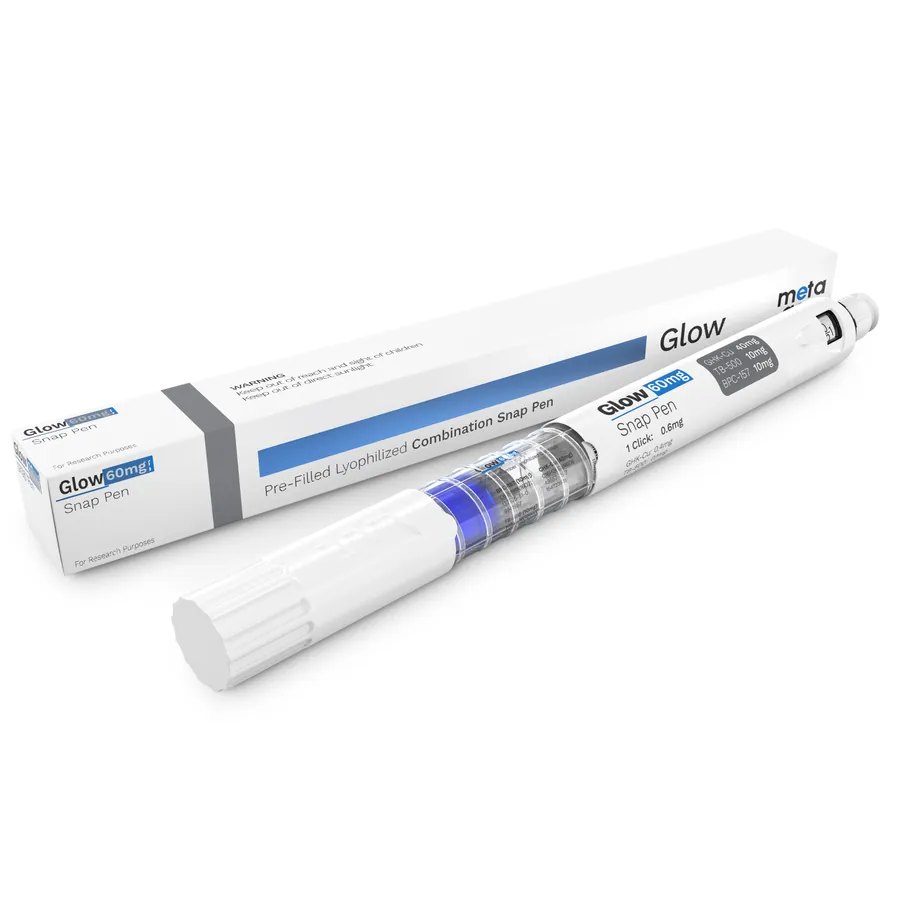
Glow (GHK-Cu, BPC-157, TB-500) 60mg Combination Snap Pen
GHK-Cu + BPC-157 + TB-500 blend — skin-quality, tissue-repair & inflammation research, ready-to-mix dual-chamber pen
Recovery & RepairSnap PenSkin, Hair & Beauty
SKU: SP-GLO-10-1
$270
- Format
- Snap Pen
- Dosage
- 0.6mg combined per click.
- Capacity
- 60 mg
Potential benefits
- Skin-quality research
- Tissue-repair research
- Inflammation modulation
- Angiogenesis & microvascular research
- Wound-repair research
Glow blends three well-studied actives into one “twist-to-mix” combination Snap Pen:
1. GHK-Cu studied for skin quality, collagen/elastin support, and wound repair; GHK-Cu (Copper Tripeptide-1) binds copper(II) and signals dermal repair genes, increasing collagen, elastin, and GAG synthesis, supporting nerve and vessel outgrowth, and improving skin structure and appearance. Read more about GHK-Cu here.
2. BPC-157 studied for tissue healing, angiogenic support, and inflammation; BPC-157 engages pro-healing pathways (e.g., growth-factor signaling, NO balance), supporting angiogenesis, fibroblast migration, and anti-inflammatory effects across tendon, ligament, muscle, and gut tissues. Read more about BPC-157 here.
3. TB-500 (Thymosin β4 fragment) for cell migration, angiogenesis, and regenerative balance. TB-500 (Thymosin β4 fragment) modulates actin dynamics, enhancing cell migration, angiogenesis, and matrix organization; it’s shown to reduce scar formation and improve repair in multiple tissues. Read more about TB-500 here.
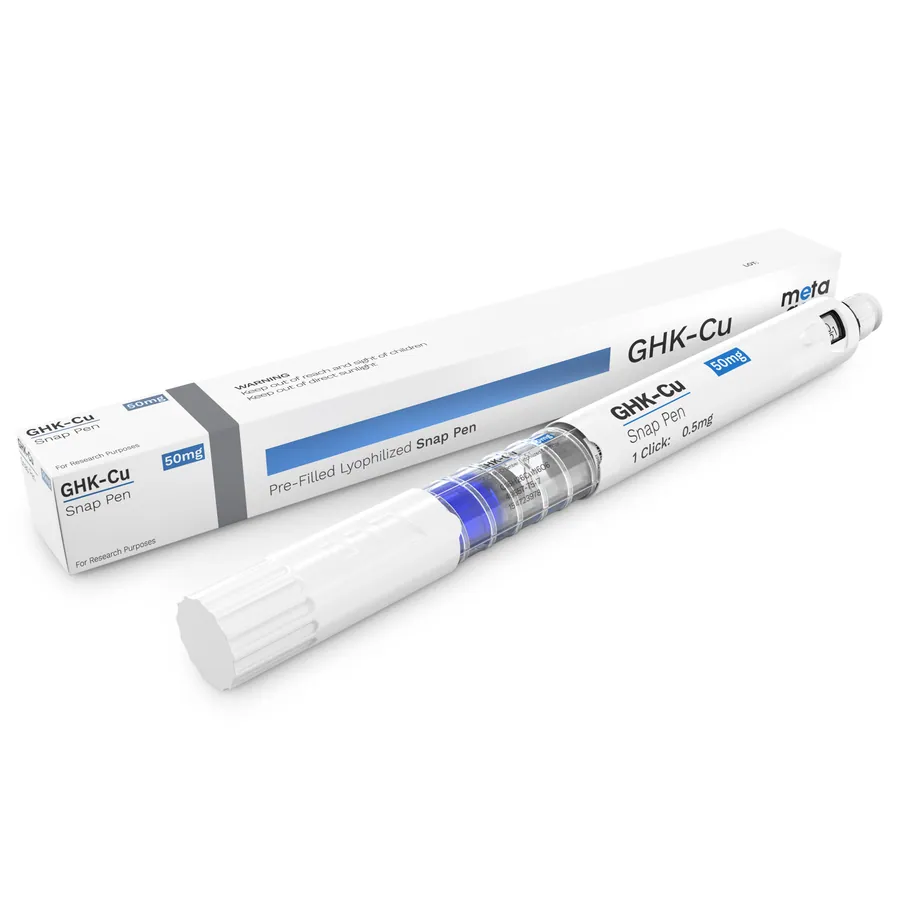
Together, research suggests these mechanisms complement one another: research associates GHK-Cu with dermal remodeling, BPC-157 with inflammation and vascular repair, and TB-500 with cell migration and blood supply, an integrated approach to rejuvenation + regeneration. Our Snap Pen keeps the peptide phase and bacteriostatic diluent separated in two chambers. At first use, the guest simply twists to snap the internal seal, mixes by gentle inversion, and the formula is ready for precise dosing. This preserves peptide stability prior to reconstitution and delivers a fresh, uniform solution in medical trials. Evidence across these actives is strongest in preclinical and early translational settings (for GHK-Cu, human cosmetic/dermatologic data also exist). Individual responses vary; compounds are investigational outside approved indications.
1. GHK-Cu studied for skin quality, collagen/elastin support, and wound repair; GHK-Cu (Copper Tripeptide-1) binds copper(II) and signals dermal repair genes, increasing collagen, elastin, and GAG synthesis, supporting nerve and vessel outgrowth, and improving skin structure and appearance. Read more about GHK-Cu here.
2. BPC-157 studied for tissue healing, angiogenic support, and inflammation; BPC-157 engages pro-healing pathways (e.g., growth-factor signaling, NO balance), supporting angiogenesis, fibroblast migration, and anti-inflammatory effects across tendon, ligament, muscle, and gut tissues. Read more about BPC-157 here.
3. TB-500 (Thymosin β4 fragment) for cell migration, angiogenesis, and regenerative balance. TB-500 (Thymosin β4 fragment) modulates actin dynamics, enhancing cell migration, angiogenesis, and matrix organization; it’s shown to reduce scar formation and improve repair in multiple tissues. Read more about TB-500 here.
Together, research suggests these mechanisms complement one another: research associates GHK-Cu with dermal remodeling, BPC-157 with inflammation and vascular repair, and TB-500 with cell migration and blood supply, an integrated approach to rejuvenation + regeneration. Our Snap Pen keeps the peptide phase and bacteriostatic diluent separated in two chambers. At first use, the guest simply twists to snap the internal seal, mixes by gentle inversion, and the formula is ready for precise dosing. This preserves peptide stability prior to reconstitution and delivers a fresh, uniform solution in medical trials. Evidence across these actives is strongest in preclinical and early translational settings (for GHK-Cu, human cosmetic/dermatologic data also exist). Individual responses vary; compounds are investigational outside approved indications.
- Studied for collagen, elastin, and glycosaminoglycan synthesis and effects on skin firmness and appearance.
- Studied for fibroblast activity, neovascularization, and ECM remodeling across skin, tendon/ligament, and soft tissue.
- Studied for effects on pro-inflammatory cytokines and oxidative stress markers associated with healing and skin aging.
- Studied for effects on microcirculation in injured or photo-aged tissue.
- Mechanistic and preclinical data suggest reduced fibrosis, improved closure quality, and balanced remodelling
References
- Regenerative & protective actions, gene-level mechanisms (review)
- Copper peptides in skin anti-aging/cosmetics (review)
- PubMed record of GHK-Cu review
- Narrative review—musculoskeletal healing, angiogenesis, anti-inflammatory actions
- Orthopedic sports medicine overview (preclinical + early clinical signal) BPC-157
- Functional/therapeutic overview of Tβ4 TB-500 in repair/regeneration (review)
- Landmark Nature paper TB-500—cardiac cell migration/survival & repair
| Molecular formula | C62H98N16O22 / C38H68N10O14 / C16H26CuN6O6 |
|---|---|
| CAS number | 137525-51-0 |
| Storage | Before reconstitution, store 6–50°C, refrigeration is not required. After reconstitution (mixing), keep refrigerated at 2–8°C at all times, use within 6 weeks. Do not freeze. Keep away from direct sunlight and heat. |
Synonyms: Bpc-157, 137525-51-0, Bepecin, Bpc 15 TB500, 885340-08-9, UNII-QHK6Z47GTG, QHK6Z47GTG GHK-Cu acetate, 300801-03-0, TB-500, copper;acetic acid, 2-6-amino-2-[[(2S)-2-(2-aminoacetyl)azanidyl-3-(1H-imidazol-4-yl)propanoyl]amino]hexanoate, GHK-Cu acetate, Gly-is-Lys-Cu(II)